

New Survey Finds Growing Economic Anxiety and Declining Quality of Life Among Massachusetts Middle Class
Press contact:
Steve Koczela
President, The MassINC Polling Group
Marta Churella
Senior Research Director, The MassINC Polling Group
New Survey Finds Growing Economic Anxiety and Declining Quality of Life Among Massachusetts Middle Class
CommonWealth Beacon: For Mass. residents, housing is where affordability hits hardest
Boston, MA. April 6, 2026 — A new statewide survey conducted by the MassINC Polling Group reveals deepening economic pessimism among Massachusetts residents, with many reporting declining quality of life, financial strain, and delayed life milestones. Based on a survey of 854 adults conducted April 3–22, 2026, the findings paint a stark picture of a state where prosperity feels increasingly out of reach for the middle class.
The survey was sponsored by MassINC. Input and survey support were provided by CommonWealth Beacon and WBUR. The survey was conducted in part to mark MassINC’s 30th anniversary, for which both CommonWealth Beacon and the MassINC Policy Center are also doing special projects focused on the middle class.
The survey is being covered by both CommonWealth Beacon and WBUR. Here are some of the survey’s key findings:
Perceived quality of life has declined over time.
Across nearly every demographic group, more say their quality of life is worse than better, compared to five years ago. Overall, 40% say their quality of life has worsened, compared to just 20% who say it has improved. A third (34%) now rate their quality of life as “excellent” or “very good,” compared to 43% when MassINC asked the same question in 2003. Meanwhile, the share describing life as “fair” or “poor” has increased.
Residents’ financial outlook is increasingly negative.
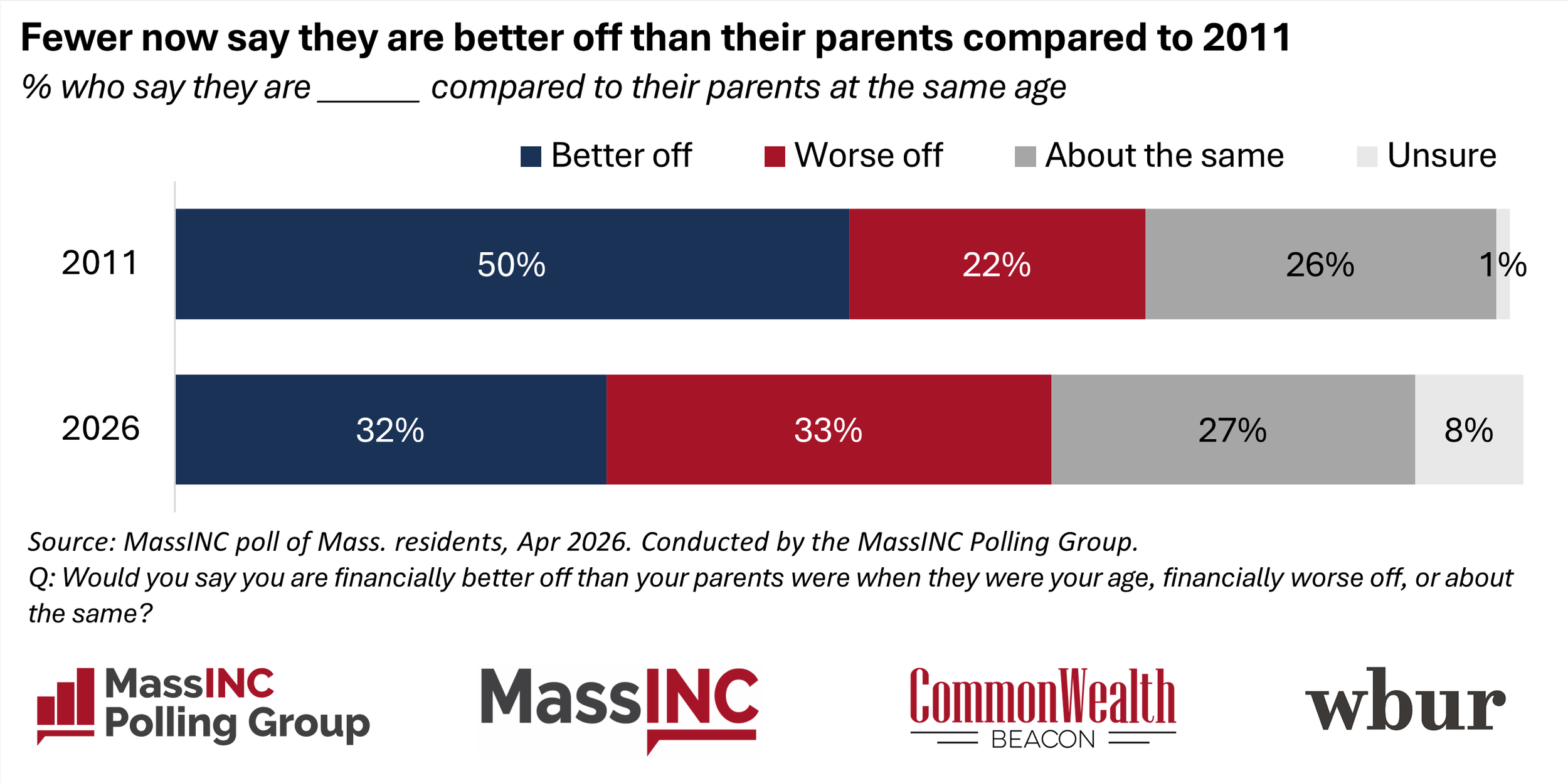
Economic concerns are widespread and growing, with 42% reporting they are worse off financially than one year ago compared to 17% who say things are better. Only 27% expect their finances to improve in the coming year. These findings come at a time of consumer pessimism nationwide, driven by a combination of inflation, the war in Iran, and broad concerns about affordability. Long-term mobility is also in question. Just 32% say they are better off than their parents, down sharply from 50% in 2011, threatening a long held assumption of generational progress.
Staying in the middle class is getting more expensive.
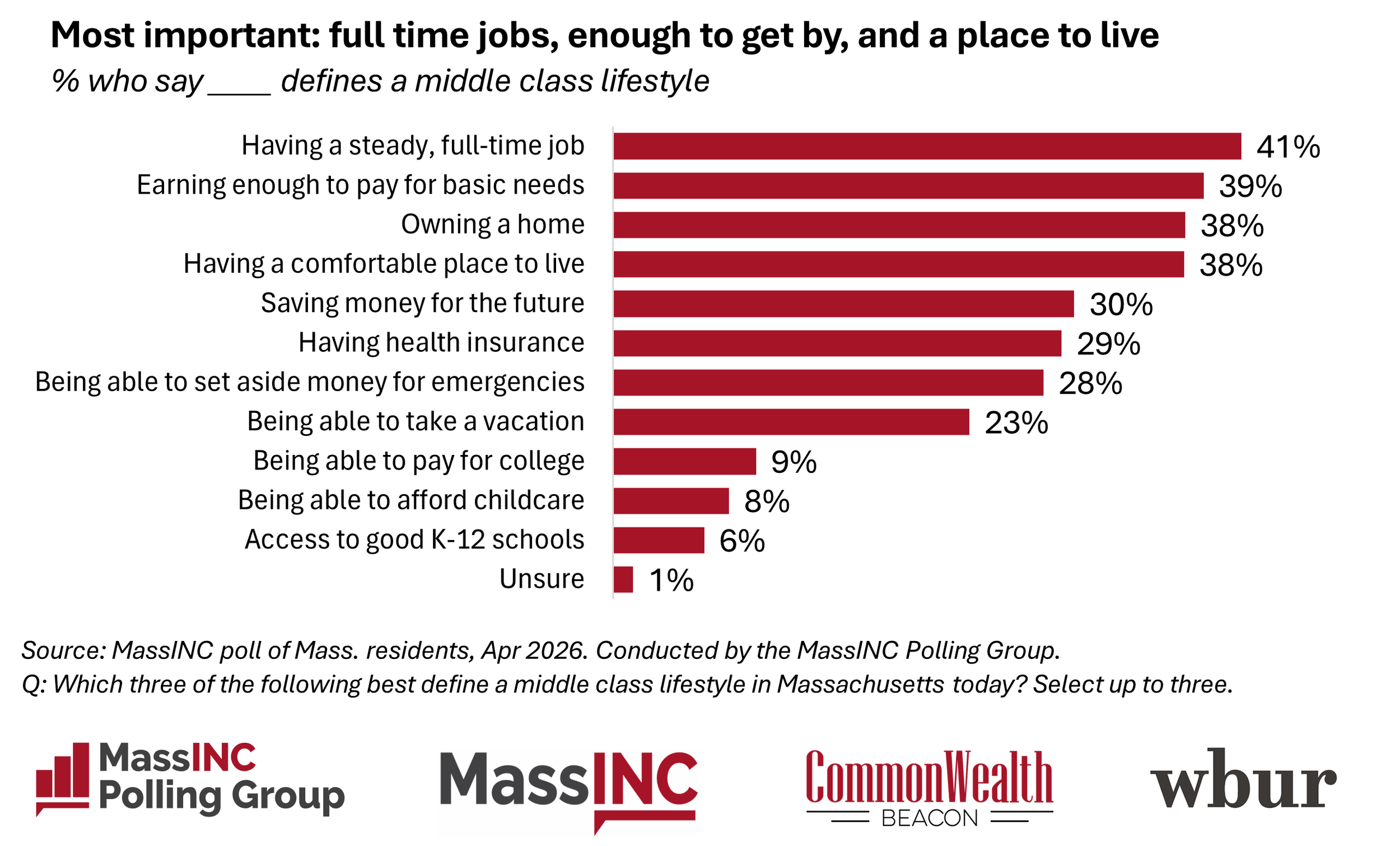
While self-identified class status has remained largely stable over the past two decades, the requirements for a middle-class life remain clear: a steady full-time job, enough income to cover basic needs, and stable, affordable housing. But cost of maintaining a middle class lifestyle is rising. On average, residents estimate that being middle class requires an annual household income between $97,000 and $112,000.
Economic pressures, declining optimism, and rising costs are reshaping how residents view their futures, raising urgent questions for policymakers about affordability, opportunity, and long-term economic stability.
Middle-class life milestones are being delayed.
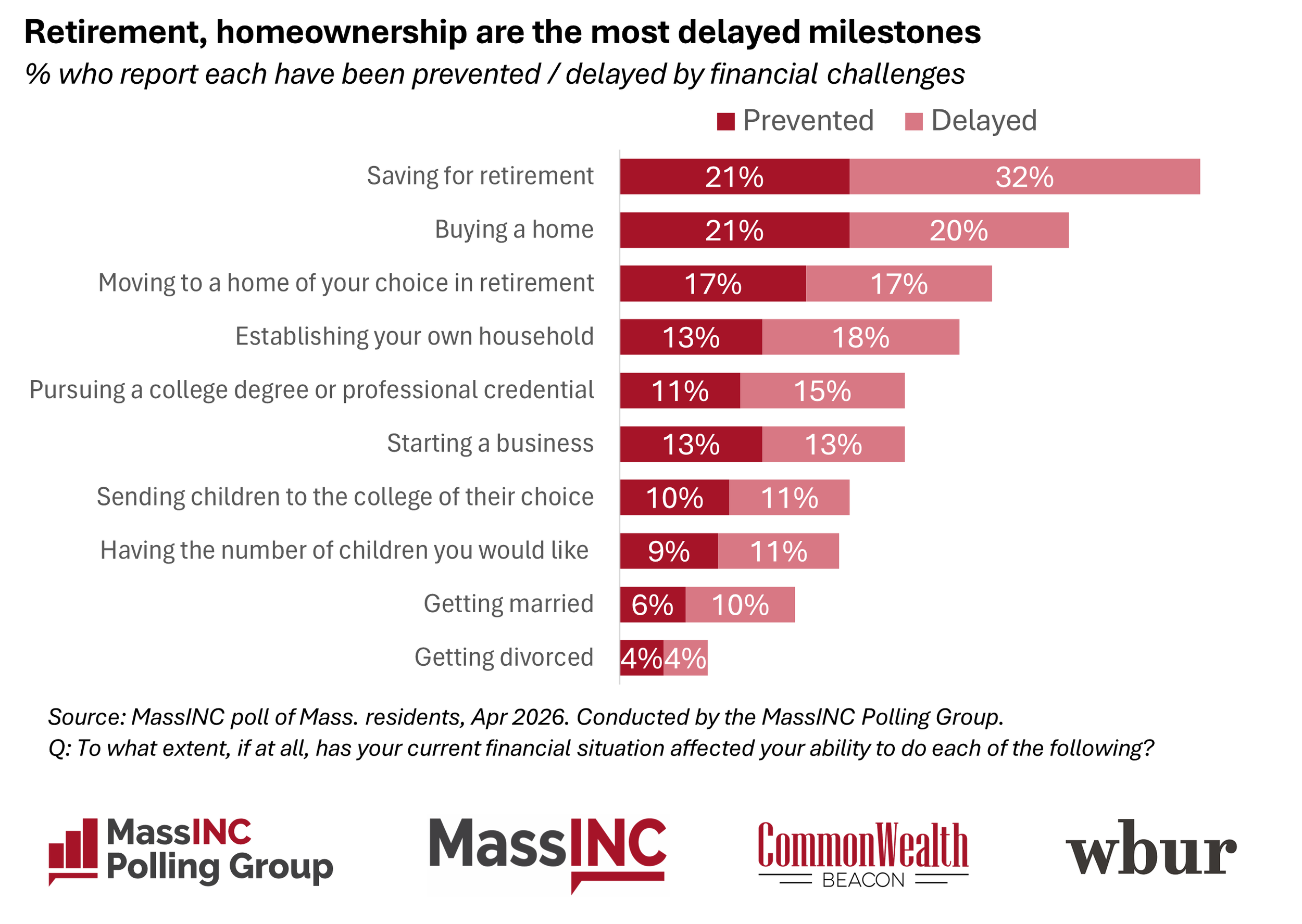
Financial pressures are reshaping life decisions, delaying retirement savings, home purchases, household formation, and more. Some residents have been able to get financial help from immediate family, but this is much more common at higher income levels. Perhaps because of their pervasive economic pessimism, residents overwhelmingly say that if they had the means, their top priority would be saving more for the future.
Affordability crisis touches nearly every aspect of life.
Residents report widespread difficulty affording both the basics and major life purchases. Housing, childcare, higher education, and healthcare are rated as unaffordable by many residents. Even basic costs like groceries and transportation strain many households. Lower-income households are disproportionately affected, but affordability concerns cut across income levels.

Massachusetts seen as favoring the wealthy.
Massachusetts may not be alone when it comes to high costs, but residents think the Commonwealth isn’t making it any easier. Nearly half of residents say Massachusetts is a better place to live if you are wealthy, while more say it is a worse place for middle-, working-class, and low-income residents.

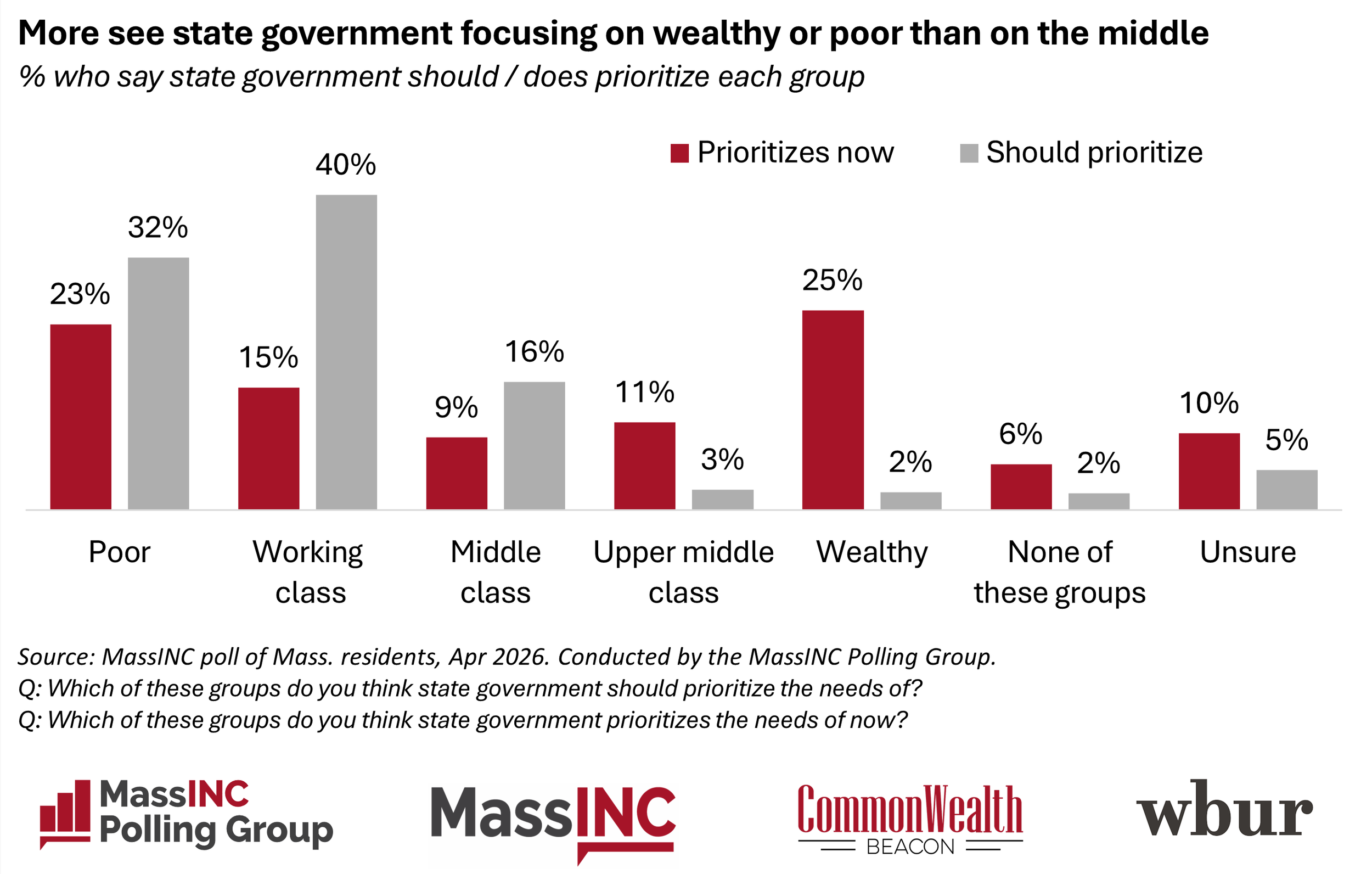
At the same time, many believe the state government prioritizes either the very wealthy or the very poor, leaving the middle class to fend for itself.
About the survey: These results are based on a survey of 854 Massachusetts residents. Responses were collected using text to web and online survey interviewing April 3 - 22, 2026. Results were weighted by race, age, gender, education, political identification, and county to reflect known and estimated population parameters for Massachusetts residents. The credibility interval for this survey is +/- 4.2 percentage points at the 95% confidence level, inclusive of the design effect. This project was conducted by The MassINC Polling Group and sponsored by MassINC with design input from CommonWealth Beacon and WBUR.
About The MassINC Polling Group: MPG is a nonpartisan public opinion research firm serving public, private, and social-sector clients. MPG elevates the public's voice with cutting-edge methods and rigorous analysis. Based in Boston, MPG serves a nationwide client base. Learn more at massincpolling.com.